
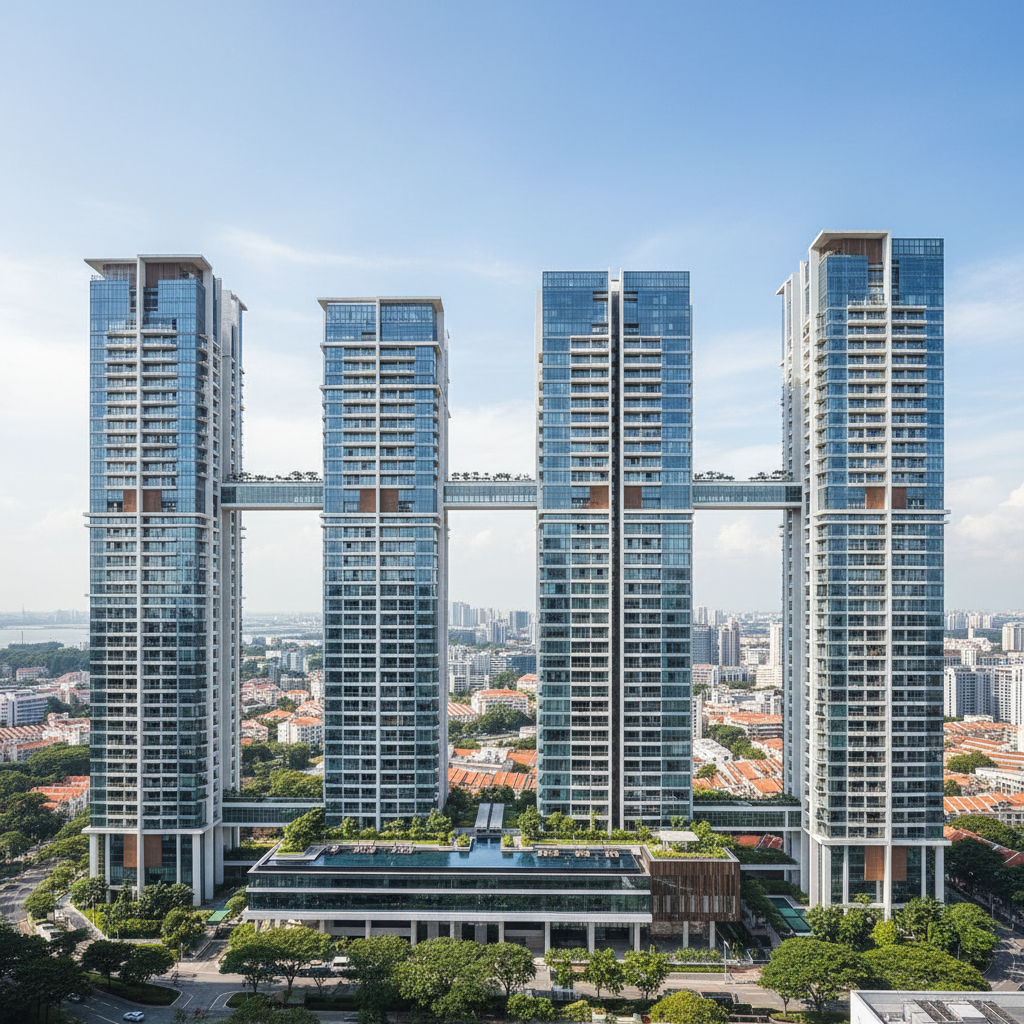
# Singapore Residential Property: Understanding the Market
The Singapore residential property market is a dynamic and significant part of the nation’s economy. For anyone considering buying, selling, or investing in a home here, understanding its unique characteristics is crucial. This article provides a clear look at what makes Singapore’s residential sector tick, from its legal framework to current market trends. We explore how regulations shape buying decisions and what factors influence property values. Whether you are a first-time buyer, a seasoned investor, or a real estate professional, gaining insight into these aspects will help you make informed choices. Singapore’s compact size and high demand create a competitive environment, making a solid understanding of its residential offerings essential for success. We will break down key concepts and provide practical examples to illustrate important points about Singapore residential property.
## Key Regulations Affecting Singapore Residential Property
Singapore’s government plays an active role in shaping the residential property market through various regulations. These policies aim to maintain affordability, prevent speculation, and ensure a stable housing supply. One primary example is the Additional Buyer’s Stamp Duty (ABSD). The ABSD is a tax levied on top of the standard Buyer’s Stamp Duty (BSD) for certain property purchases. For Singapore Citizens, ABSD applies to their second and subsequent residential properties. Permanent Residents pay ABSD on their first and subsequent properties, while foreigners pay ABSD on all residential property purchases. These rates have increased over time, with the latest adjustments in April 2023 seeing ABSD for foreigners double from 30% to 60%. This measure cools speculative demand and prioritises home ownership for citizens and permanent residents.
Another important regulation is the Total Debt Servicing Ratio (TDSR). Introduced in 2013, TDSR limits the amount an individual can borrow for property loans. It ensures that a borrower’s total monthly debt repayments, including the new property loan, do not exceed 55% of their gross monthly income. This prevents households from over-extending themselves financially and helps maintain financial stability. For example, if someone earns S$10,000 per month, their total loan repayments cannot exceed S$5,500. This calculation includes car loans, credit card debts, and personal loans, not just property-related debt.
Other key regulations include:
* **Loan-to-Value (LTV) limits:** These specify the maximum percentage of a property’s value that banks can lend. For a first housing loan, the LTV limit is typically 75%, meaning a buyer needs to pay at least 25% as down payment.
* **Seller’s Stamp Duty (SSD):** This tax applies if a residential property is sold within a certain period after purchase. It discourages short-term speculation. For instance, selling a property within one year incurs a 12% SSD.
* **Minimum Occupation Period (MOP) for HDB flats:** HDB flat owners must occupy their flat for at least five years before they can sell it on the open market. This ensures public housing serves its primary purpose of providing affordable homes.
These policies demonstrate the government’s commitment to ensuring a sustainable and stable Singapore residential property market. They create a structured environment where both buyers and sellers operate with clear boundaries.
## Understanding Different Types of Singapore Residential Property
The Singapore residential property landscape offers a variety of housing options, each with distinct characteristics and ownership rules. These options cater to different budgets, lifestyles, and family sizes. The most common types fall into two main categories: public housing and private housing.
### Public Housing (HDB Flats)
Public housing, primarily built and managed by the Housing & Development Board (HDB), provides affordable homes for the majority of Singapore’s population. Key features include:
* **Subsidised Prices:** HDB flats are sold at subsidised prices, below market value, to eligible Singapore Citizens and Permanent Resident families.
* **Eligibility Criteria:** Strict rules apply to HDB flat ownership, covering income ceilings, family nucleus requirements, and citizenship status. For example, to buy a new HDB flat, buyers must form a family unit, and at least one applicant must be a Singapore Citizen.
* **Types of Flats:** HDB offers various flat types, from 2-room Flexi flats suitable for singles or elderly individuals, to larger 5-room and Executive flats.
* **Resale Market:** After fulfilling the Minimum Occupation Period (MOP), HDB flats can be sold on the open market, known as the HDB resale market. Prices here are influenced by location, condition, and market demand.
An example of public housing growth was the launch of Project Jewel, a Build-to-Order (BTO) exercise in Tampines, offering over 1,000 units. These new flats provided affordable options for many young families.
### Private Housing
Private housing includes condominiums, apartments, landed properties, and executive condominiums (ECs). These properties come with fewer restrictions compared to HDB flats and generally offer more amenities and space.
* **Condominiums and Apartments:** These are typically found in developments with shared facilities such as swimming pools, gyms, and security. They range from compact studio units to spacious penthouses. A recent launch like Penrith in Queenstown, a 462-unit development, falls into this category, offering modern facilities and strategic location.
* **Landed Property:** This category refers to homes built on private land, such as bungalows, semi-detached houses, and terrace houses. Landed properties are highly sought after due to their scarcity and exclusivity. Ownership often comes with specific rules for foreigners, who generally require government approval to buy landed property.
* **Executive Condominiums (ECs):** ECs are a hybrid of public and private housing. Initially subsidised by the government like HDB flats, they transform into private properties after 10 years. They cater to a sandwiched class whose income is too high for HDB flats but who cannot yet afford private condominiums. An example is the North Gaia EC in Yishun, which saw strong demand from upgraders.
Understanding these different property types helps buyers align their choices with their financial capacity, lifestyle preferences, and long-term goals within the Singapore residential property market.
## Factors Influencing Singapore Residential Property Values
Several factors continuously influence the value of Singapore residential property. These elements are interconnected and contribute to the overall price fluctuations and investment appeal of a property. Understanding them helps both buyers and sellers assess market conditions accurately.
### Location and Connectivity
Location is arguably the most significant determinant of property value. Properties in prime districts, such as Orchard, Holland Village, or the Central Business District (CBD) periphery, consistently command higher prices due to their prestige and accessibility. Beyond district desirability, proximity to key amenities and transport links plays a vital role.
* **MRT Stations:** Properties near Mass Rapid Transit (MRT) stations often see a premium. For instance, a condominium within a 5-minute walk of an MRT station can fetch 10-15% more than a similar unit further away. The upcoming Jurong Region Line and Cross Island Line extensions are expected to boost values in their respective areas.
* **Schools:** Families prioritise homes near reputable schools. Good primary and secondary schools, as well as international schools, significantly enhance property appeal and value. Areas around schools like Anglo-Chinese School (Barker Road) or Nanyang Primary often have strong demand.
* **Shopping Malls and Healthcare Facilities:** Easy access to supermarkets, shopping centres, and hospitals adds convenience, making a location more attractive. Developments near heartland hubs like Clementi Town Centre or Bedok Mall benefit from this.
### Economic Conditions and Government Policies
The broader economic health of Singapore directly impacts property values. A strong economy, characterised by low unemployment and high GDP growth, generally leads to increased consumer confidence and higher property demand. Conversely, economic downturns can soften the market.
Government policies, as discussed earlier, are powerful tools that shape market trends. Measures like ABSD, TDSR, and LTV limits can cool down an overheated market or stabilise it during uncertainty. When the government tightens property cooling measures, transaction volumes may decrease, and price growth might moderate. If measures are relaxed, the market could see a resurgence in activity and prices. For example, recent adjustments to housing grants for HDB buyers have stimulated demand in the public housing sector.
### Supply and Demand Dynamics
The fundamental economic principles of supply and demand are crucial. A limited supply of new residential units coupled with strong buyer demand will drive prices up. Conversely, an oversupply can lead to price stagnation or even declines.
* **New Launches:** The number of new private residential units launched by developers each quarter significantly influences supply. When developers hold back launches, available stock decreases.
* **Resale Market Inventory:** The inventory of properties available on the resale market also impacts prices. High inventory suggests more choices for buyers, potentially leading to competitive pricing.
* **Population Growth:** A growing population, especially with an influx of expatriates, increases overall housing demand in Singapore.
Understanding these factors allows individuals to better forecast market movements and make informed decisions regarding their Singapore residential property interests.
## Purchase Process for Singapore Residential Property
The journey to owning Singapore residential property involves several structured steps, whether buying a new launch or a resale unit. Being familiar with this process helps buyers prepare financially and legally.
### For Private Property (New Launches and Resale)
The process typically begins with financial planning and securing loan approval.
1. **Financial Planning and Loan Eligibility:**
* Assess your budget, including down payment, stamp duties, legal fees, and renovation costs.
* Speak with a mortgage banker to understand your Total Debt Servicing Ratio (TDSR) limit and Loan-to-Value (LTV) ratio.
* Get an Approval-In-Principle (AIP) for a home loan, which indicates the maximum loan amount a bank is willing to lend you. This provides clarity on your purchasing power. For a S$1.5 million condominium, for example, a 75% LTV means a S$1,125,000 loan, requiring a S$375,000 down payment.
2. **Property Search and Selection:**
* Identify properties that meet your criteria for location, type, size, and budget. For a new launch, visit the showflat. For resale, arrange viewings with real estate agents.
* Conduct due diligence on the property and its surroundings. Check master plans for future developments.
3. **Exercise Option to Purchase (OTP):**
* Once you find a suitable property, you will pay an option fee to the seller or developer to secure an Option to Purchase (OTP). This fee is usually 1% of the purchase price for resale properties and a fixed sum, often S$5,000, for new launches.
* The OTP grants you a period, usually 14 days, to consider the purchase and finalise your financing.
4. **Engage a Solicitor:**
* You will need to appoint a solicitor to handle the legal aspects of the transaction, such as conducting title searches and preparing legal documentation.
5. **Exercise the Option and Complete Sale:**
* If you decide to proceed, you will exercise the OTP by signing the Sale & Purchase Agreement and paying a further deposit, typically 4% for resale or 9% for new launches (bringing the total to 5% or 10% respectively).
* Your solicitor will handle the remaining legal work, leading to the completion of the sale, usually within 8 to 12 weeks for resale and in stages for new launches. This includes paying the Buyer’s Stamp Duty (BSD) and Additional Buyer’s Stamp Duty (ABSD) if applicable.
### For HDB Flats (Resale)
The process for HDB resale flats has specific steps governed by HDB rules.
1. **HDB Flat Eligibility and Financial Planning:**
* Ensure you meet HDB’s eligibility conditions for buying a resale flat (e.g., citizenship, family nucleus, income ceiling for grants).
* Determine your financial capacity. HDB offers HDB loans, which have different criteria and LTV limits (up to 85% for eligible buyers) compared to bank loans.
* Obtain a HDB Loan Eligibility (HLE) letter if you plan to take an HDB loan, or an AIP from a bank.
2. **Property Search and OTP:**
* Search for HDB flats on the open market.
* Request an Option to Purchase from the seller. You will pay a negotiated option fee (S$1 to S$1,000). The Option period is 21 days for HDB resale.
3. **Valuation Report:**
* Submit a Request for Value to HDB. This determines the value of the flat, which impacts the maximum loan amount from HDB or a bank, and also the CPF usage.
4. **Resale Application Submission:**
* After exercising the OTP, you and the seller submit your respective portions of the resale application to HDB.
* HDB reviews the application, which includes eligibility checks and documentation.
5. **Completion of Sale:**
* If approved, attend the Resale Completion Appointment at HDB Hub, where ownership is officially transferred, and keys are handed over. This usually happens about 8 weeks after HDB accepts the resale application.
This structured approach ensures transparency and adherence to regulations for every Singapore residential property transaction.
## The Future Landscape of Singapore Residential Property
The Singapore residential property market is constantly evolving, influenced by global economic forces, technological advancements, and domestic policies. Looking ahead, several factors will shape its future landscape, affecting affordability, sustainability, and quality of life.
One significant trend is the continued focus on **sustainable development and smart living**. Singapore aims to become a “City in a Garden,” and future residential projects will increasingly incorporate green features, energy-efficient designs, and smart home technologies. For instance, new HDB towns like Tengah are being planned with extensive green spaces, car-free town
### Let’s Talk About Your Property Goals
Whether you’re looking to buy, sell, or invest, we’re here to help. WhatsApp us to book a consultation or explore opportunities with Zaidean.