
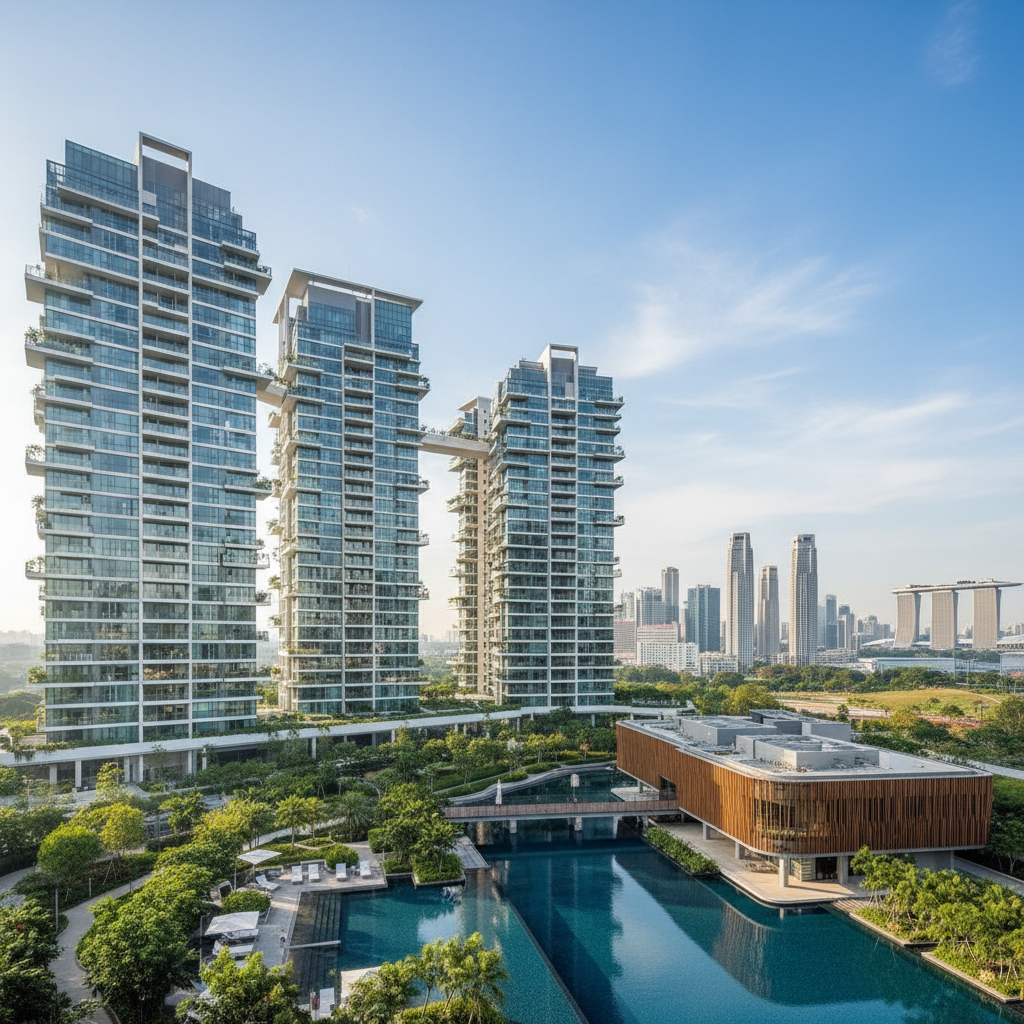
Your Essential EC Guide: Understanding Executive Condominiums in Singapore
Executive Condominiums (ECs) offer a unique housing solution in Singapore. They bridge the gap between public housing (HDB flats) and private condominiums. Many Singaporeans find ECs appealing because they offer private condominium-like living at a more affordable price. This comprehensive EC guide will explain what ECs are, who can buy them, and why they might be a good choice for your family. We will look at the benefits and rules, providing practical advice for buyers and sellers in Singapore. Understanding ECs helps you make smart property decisions.
An Executive Condominium starts as a public-private hybrid. The government subsidises the land cost, making ECs cheaper than full private condominiums. However, ECs come with specific eligibility criteria and a minimum occupation period (MOP). After a certain number of years, ECs privatise, meaning they become like private condominiums. This change opens up the market to a wider range of buyers, including foreigners. This EC guide will break down these stages and rules. We aim to give you a clear picture of the EC market in Singapore. Whether you are a first-time buyer or an experienced investor, this guide provides valuable information.
What Exactly is an Executive Condominium (EC)?
An Executive Condominium (EC) is a type of housing in Singapore that combines features of public and private properties. The government introduced ECs to cater to the “sandwich class.” These are families whose incomes are too high for HDB flats but too low for private condominiums. EC developments are built by private developers but sold with HDB rules in the initial years. This dual nature is a key aspect of any EC guide.
During the first 10 years, ECs have restrictions similar to HDB flats. For example, buyers must meet HDB eligibility criteria, and there is a Minimum Occupation Period (MOP) of five years. During the MOP, owners cannot sell or rent out the entire unit. After five years, Singapore Permanent Residents (SPRs) can buy ECs from the open market. After 10 years, ECs are fully privatised. This means they can be sold to foreigners and corporate entities, just like private condominiums. This privatisation process often leads to capital appreciation for early buyers.
For example, the Bellewaters EC in Sengkang, launched in 2014, offered modern facilities at a competitive price. Buyers met HDB income ceilings and enjoyed grants. Now, as it approaches its 10-year mark, its value is expected to increase as it opens to a wider market. Another example is The Canopy EC in Yishun, which privatised a few years ago. Units there now command prices similar to private condominiums in the area, showing the potential for capital gains. This transition makes ECs an attractive long-term investment for many Singaporeans.
Eligibility Criteria for Buying a New EC
Buying a new Executive Condominium directly from a developer comes with strict eligibility rules. These rules ensure that ECs serve their intended purpose: providing affordable housing for the “sandwich class.” This section of our EC guide details these important criteria. Understanding them is the first step to owning an EC.
Firstly, all applicants must be Singapore Citizens. For couples, at least one applicant must be a Singapore Citizen and the other a Singapore Permanent Resident. Single Singapore Citizens cannot buy a new EC directly from a developer. They must form a family nucleus. This means applying with a spouse, parents, or children. The core family nucleus must include at least one Singapore Citizen.
Secondly, there is an income ceiling. As of the current rules, the total monthly household income must not exceed S$16,000. This ceiling helps ensure that ECs remain affordable for the target group. For instance, a couple earning a combined S$15,000 per month would qualify, assuming they meet other criteria. If their income is S$17,000, they would not be eligible for a new EC.
Thirdly, applicants must not own any other property, either locally or overseas. If they did, they must have disposed of it at least 30 months before the EC application. This “owner-occupier” rule ensures that ECs are for those who genuinely need a home, not for investment purposes. For example, if you sold your private apartment in January 2022, you would need to wait until July 2024 to apply for a new EC.
Finally, applicants must not have bought various types of subsidised housing more than once. This includes HDB flats, Design, Build and Sell Scheme (DBSS) flats, and ECs from developers. They also cannot have received more than one housing grant. For instance, if you previously bought an HDB flat with a housing grant, you might not be eligible for another grant when buying an EC. These rules are in place to ensure fair allocation of subsidised housing. The Parc Canberra EC in Sembawang, launched in 2020, saw many eligible young families apply, showcasing the demand for such properties.
The EC Purchase Process: From Application to Ownership
The process of buying an Executive Condominium (EC) differs from buying a private condominium or an HDB flat. This section of our EC guide breaks down the steps involved, offering a clear roadmap for prospective buyers. Knowing the process helps you prepare and avoid any surprises.
The first step is to check your eligibility. As discussed, you need to meet the citizenship, family nucleus, income ceiling, and property ownership criteria. Many developers have consultants who can help you verify your eligibility before you even look at units. Once eligible, you can submit an e-application to the developer of the EC project you are interested in. This application includes your personal details and family information.
Next, if your e-application is successful, you will be invited for an executive showflat viewing. This is where you can look at the unit layouts, facilities, and finishes. After the viewing, you can book a unit. This usually involves paying a 5% booking fee. The developer will then issue you an Option to Purchase (OTP). This document reserves the unit for you.
Within 8 weeks of the OTP date, you need to appoint a solicitor to act for you. The solicitor will explain the Sale and Purchase Agreement (S&PA). You will sign the S&PA and pay stamp duty. This is typically within 2 to 4 weeks of receiving the S&PA. You also need to secure a home loan from a bank. Most buyers get an Approval-in-Principle (AIP) from a bank early in the process to know their budget.
The payment schedule for an EC follows a progressive payment scheme. You pay instalments at different stages of construction. For example, you pay a percentage when the foundation is done, another when the building structure is complete, and so on. The final payment is made upon completion and key collection. An example is the North Gaia EC in Yishun, where buyers followed this standard progressive payment. They paid the initial 5% booking fee, then 15% upon signing the S&PA, and subsequent payments as construction progressed. This phased payment structure helps manage cash flow for buyers.
Selling an EC: Rules and Opportunities
Selling an Executive Condominium (EC) involves specific rules, especially regarding the Minimum Occupation Period (MOP) and privatisation status. This part of our EC guide explains these rules and highlights the opportunities that arise at different stages of an EC’s life cycle. Understanding these points is crucial for EC owners looking to sell.
The most important rule is the Minimum Occupation Period (MOP). EC owners must live in their unit for at least five years from the date of key collection. During this five-year MOP, you cannot sell the EC on the open market. You also cannot rent out the entire unit. You can only rent out spare bedrooms, provided you live in the unit. Selling before the MOP is only allowed under very specific, compassionate grounds approved by HDB, such as divorce or death.
After the MOP (typically from the 6th to the 10th year of the EC’s launch), you can sell your EC to Singapore Citizens and Singapore Permanent Residents (SPRs). This opens up the market beyond the initial eligible group. During this period, the EC is still considered a “hybrid” property. Buyers must meet HDB eligibility criteria, but for SPRs, the rules are slightly different from buying an HDB resale flat. For instance, SPRs can buy an EC without needing to form a family nucleus, but they must not own any other residential property in Singapore. An example is the Punggol Spectra EC, which entered this phase a few years ago. Owners could sell to SPRs, often seeing a good return on their initial investment.
After 10 years from the EC’s Temporary Occupation Permit (TOP) date (or Certificate of Statutory Completion, CSC, whichever is earlier), the EC becomes fully privatised. This is a significant milestone. Once privatised, the EC is treated like a private condominium. It can be sold to anyone, including foreigners and corporate entities. This expanded buyer pool often leads to a noticeable increase in property value. The Eastvale EC in Pasir Ris, which privatised some years ago, saw its property values appreciate significantly, attracting a wider range of buyers and investors. This full privatisation offers the best opportunity for capital gains for original owners.
Long-Term Benefits and Considerations for EC Owners
Owning an Executive Condominium (EC) offers several long-term benefits, but also comes with certain considerations. This section of our EC guide explores what EC owners can expect beyond the initial purchase and MOP. Thinking long-term helps you maximise your investment and plan for the future.
One major benefit is the potential for capital appreciation. Because ECs are initially sold at a subsidised price and then privatise, they often see a good increase in value over time. The gap between EC prices and private condominium prices tends to narrow as the EC approaches and passes its 10-year mark. This is because the buyer pool expands significantly. For example, buyers of The Dew EC in Bukit Batok, which privatised several years ago, saw their property values rise considerably, making it a good investment for many original owners.
Another benefit is the condominium lifestyle at a lower cost. ECs typically offer full condominium facilities like swimming pools, gyms, clubhouses, and security. These amenities provide a comfortable living environment that is often out of reach for those who only qualify for HDB flats. Living in an EC means enjoying these facilities without paying the premium price of a private condominium at the point of purchase.
However, there are also considerations. The MOP of five years means you are tied to the property for that period. This limits flexibility if your housing needs change suddenly. Also, while ECs offer good appreciation, the market conditions at the point of sale will always play a role. There is no guarantee of specific returns. Buyers should always do their due diligence and understand the market trends.
Financing can also be a consideration. While HDB grants are available for new ECs, the loan quantum might be lower compared to private condominiums. Buyers should consult with financial advisors to understand their loan eligibility and payment plans. Despite these points, for many Singaporean families, an EC represents a strong pathway to private property ownership and a comfortable lifestyle. It offers a balance of affordability and amenities that is hard to find elsewhere in Singapore’s property market.
Start Your Property Journey with Zaidean
Whether you’re buying, selling, upgrading, or exploring a career in real estate — Zaidean walks with you. We believe in clarity, results, and people-first service. WhatsApp us to book a consultation or learn how to grow with us.