
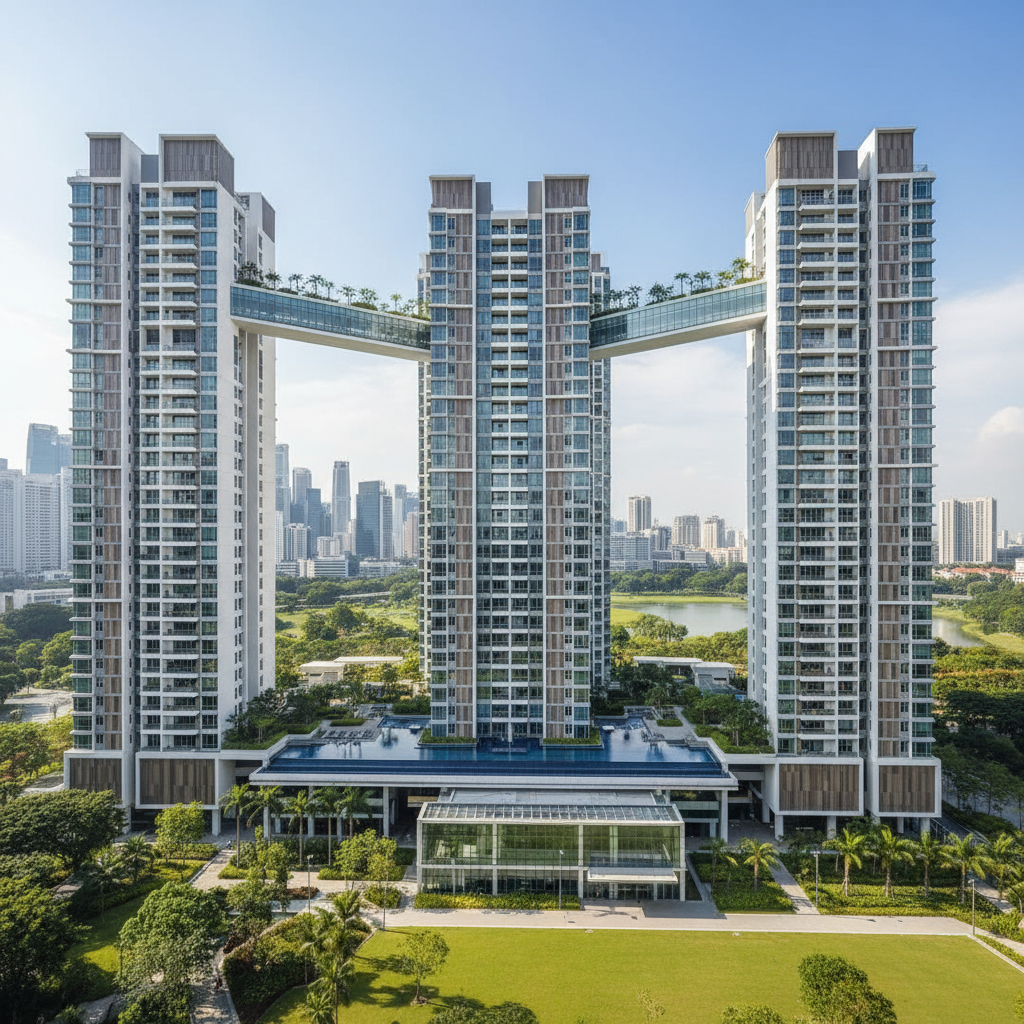
Understanding EC Eligibility: Your Guide to Executive Condominiums in Singapore
Executive Condominiums, or ECs, represent a unique housing option in Singapore. They blend the affordability of public housing with the amenities and design of private condominiums. For many Singaporean families, ECs offer an attractive pathway to private property ownership without the high price tag of fully private developments. However, securing an EC requires meeting specific eligibility criteria. Understanding these rules is important for anyone considering an EC purchase. This guide will explain EC eligibility in detail, helping potential buyers, sellers, and real estate professionals understand this important segment of the Singapore property market.
ECs start as HDB (Housing & Development Board) properties with specific ownership rules. After a 5-year Minimum Occupation Period (MOP), owners can sell them to Singapore citizens and Permanent Residents (PRs). After 10 years, the EC becomes fully privatised, meaning it can be sold to foreigners as well, and the HDB rules no longer apply. This gradual liberalisation makes ECs a fascinating option. We will break down the requirements, provide practical examples, and offer advice to help you make informed decisions about EC eligibility.
Who Can Buy a New Executive Condominium Directly from a Developer?
Buying a new EC directly from a developer comes with strict HDB rules. These rules ensure that ECs serve their intended purpose: providing affordable private-like housing for Singaporean families. If you are thinking of buying a brand-new EC, pay close attention to these criteria. Missing even one requirement can prevent your purchase.
The main eligibility conditions revolve around your citizenship, family nucleus, income, and property ownership status. You must form a family nucleus under one of HDB’s schemes. These schemes include Public Scheme, Fiance/Fiancee Scheme, Orphans Scheme, or Joint Singles Scheme. For example, a married couple buying under the Public Scheme must include at least one Singapore Citizen. Both applicants must be at least 21 years old. For the Joint Singles Scheme, both applicants must be Singapore Citizens, at least 35 years old, and unmarried.
* Citizenship: At least one buyer in your family nucleus must be a Singapore Citizen. If there are two buyers, at least one of them must be a Singapore Citizen. The other buyer can be a Singapore Citizen or a Permanent Resident.
* Age: All applicants must be at least 21 years old at the time of application. For the Joint Singles Scheme, applicants must be at least 35 years old.
* Income Ceiling: Your household’s gross monthly income must not exceed S$16,000. This ceiling applies to the combined income of all applicants and essential occupants (if any). This maximum income ensures that ECs remain available to middle-income families. Income is assessed based on the last 12 months’ stable employment.
* Property Ownership: You must not own any other property, either in Singapore or overseas. This includes private residential property, HDB flats, or any land. If you previously owned private property, you must dispose of it at least 30 months before your EC application. This rule prevents property hoarders from using ECs as a quick investment.
Consider the example of Mr. and Mrs. Lim. Mr. Lim is a Singapore Citizen, and Mrs. Lim is a Singapore Permanent Resident. They are both 38 years old. Their combined gross monthly income is S$15,000. They do not own any other property. They meet all the criteria to purchase a new EC directly from a developer. However, if their income was S$17,000, they would exceed the income ceiling and would not be eligible to buy a new EC.
EC Eligibility After the Minimum Occupation Period (MOP)
The Minimum Occupation Period (MOP) is an important concept for ECs. It dictates when an EC can be sold and to whom. All HDB flats and ECs have an MOP of five years. This period starts from the date of key collection. During the MOP, the owners must physically occupy the flat. They cannot sell or rent out the entire unit. Once the MOP is complete, the EC enters a different phase of eligibility.
After the 5-year MOP, an EC can be sold in the open market. However, there are still restrictions on who can buy it. This period, from the 5th year to the 10th year after key collection, is like a transitional phase. The EC is no longer subject to HDB’s direct allocation rules for new flats, but it is not yet fully privatised.
The key points for buying a resale EC after MOP (but before full privatisation) are:
* Singapore Citizens and Permanent Residents: Only Singapore Citizens and Singapore Permanent Residents are eligible to buy these ECs. Foreigners are not allowed to purchase during this period. This restriction ensures that ECs continue to serve the housing needs of residents.
* No Income Ceiling: Unlike buying a new EC, there is no income ceiling for buyers of resale ECs after MOP. This opens up the market to a wider range of income groups. A high-income earner who might not qualify for a new EC due to the S$16,000 income cap can now purchase a resale EC.
* No Property Ownership Restrictions: Buyers of resale ECs after MOP are not subject to the HDB property ownership restrictions. This means you can own other private properties or HDB flats and still buy a resale EC. This flexibility makes resale ECs attractive to those looking for a second property or an investment.
* Loan Restrictions: While HDB rules on ownership are relaxed, buyers will typically finance their purchase with a bank loan, not an HDB loan. The Loan-to-Value (LTV) limits and Total Debt Servicing Ratio (TDSR) still apply.
For instance, consider Sarah, a Singapore Citizen who owns a private condominium. She is looking to upgrade to a larger unit but wants something more affordable than a fully private condo. She sees a resale EC that has just completed its 5-year MOP. Because there are no HDB property ownership restrictions for resale ECs after MOP, Sarah can purchase this EC even though she already owns a private property. This option would not be available if she were trying to buy a new EC.
Full Privatisation: EC Eligibility After 10 Years
The final stage in the EC lifecycle is full privatisation. This occurs 10 years after the Temporary Occupation Permit (TOP) date of the development. Once an EC is fully privatised, it functions exactly like any other private condominium. All HDB restrictions are lifted entirely.
This full privatisation opens the market significantly, potentially increasing the property’s value due to a wider pool of buyers. Understanding this stage is important for current EC owners planning to sell and for potential buyers seeking unrestricted options.
Key aspects of EC eligibility after full privatisation:
* Foreigners Can Buy: After 10 years, foreigners are eligible to purchase these ECs. This is a major change from the first 10 years. It means a larger market of potential buyers, including expatriates and international investors. This expanded buyer pool can have a positive impact on property prices.
* No Income Ceiling: Just like the 5-to-10-year period, there is no income ceiling for buyers of fully privatised ECs.
* No Property Ownership Restrictions: Buyers can own multiple properties, similar to purchasing any other private condominium. The HDB rule that restricts buyers from owning other properties is completely removed.
* Standard Private Property Rules Apply: All regulations that apply to private condominiums, such as stamp duties (Buyer’s Stamp Duty, Additional Buyer’s Stamp Duty), property tax, and financing rules, now fully apply to these ex-ECs.
Let’s look at an example. The Sol Acres EC, located in Choa Chu Kang, received its TOP in 2018. In 2028, it will reach its 10-year mark from TOP and become fully privatised. At that point, a Malaysian national working in Singapore, Mr. Tan, who wishes to buy property, could purchase a unit in Sol Acres. He would pay the applicable Additional Buyer’s Stamp Duty (ABSD) for foreigners, but he would not be subject to any HDB-specific EC eligibility rules. This demonstrates the transformation of an EC from a semi-public to a fully private asset.
Practical Advice and Common Pitfalls to Avoid
EC eligibility can be complex, especially with the different stages of ownership. Here is some practical advice and common pitfalls to help you make informed decisions. Both buyers and sellers should be aware of these points to ensure a smooth transaction.
* Tip: Create a checklist of all requirements: citizenship, age, family nucleus, income, property ownership history. Gather all supporting documents early.
* Case Study: Mr. and Mrs. Devi bought an EC in Sengkang. They needed to relocate overseas for work after 3 years. They thought they could sell their EC early. However, HDB informed them they must complete the 5-year MOP. They had to rent out a room, but not the entire unit, which impacted their financial and relocation plans. Always understand and respect the MOP.
* Pitfall: A common mistake is to overestimate eligible income by including unstable income sources or miscalculating bonus components. This can lead to loan rejections or HDB eligibility issues.
* Tip: Keep clear records of your private property sales. If you have any doubts, confirm with HDB directly.
* Actionable Step: Engage a reputable real estate agent early in your EC journey. Ask them to explain the different stages of EC ownership clearly.
The Financial Aspect of EC Purchases
Beyond eligibility, understanding the financial implications is crucial for EC buyers. The maximum loan amount, down payment, and stamp duties can significantly impact your purchase. These factors vary depending on whether you buy a new EC, a resale EC after MOP, or a fully privatised EC.
When buying a new EC from a developer, you typically apply for a bank loan. HDB loans are not available for ECs. The maximum Loan-to-Value (LTV) ratio for bank loans is usually 75% for your first property. This means you need a minimum 25% down payment. Of this 25%, at least 5% must be paid in cash, and the remaining 20% can be from your CPF Ordinary Account.
* Example: For a S$1,200,000 new EC, a 25% down payment is S$300,000. You would need S$60,000 in cash and can use up to S$240,000 from CPF. The remaining S$900,000 would be a bank loan.
For resale ECs (after MOP and before full privatisation), the financial requirements are similar to other private properties. Bank loans are the norm. The LTV ratio depends on how many properties you own. For a first property, it’s 75%. For a second property, it drops to 45% (if there’s an outstanding loan on the first property) or 55% (if there is no outstanding loan).
* Additional Buyer's Stamp Duty (ABSD): This is another important financial consideration. For Singapore Citizens, ABSD applies from the second property onwards. For example, a Singapore Citizen buying a second property pays 20% ABSD. Singapore Permanent Residents pay 5% ABSD on their first property and 30% on their second property. Foreigners pay 60% ABSD on any property purchase.
* Scenario: Mr. Lee, a Singapore Citizen, already owns a HDB flat (first property). He buys a resale EC which is his second property. He will pay 20% ABSD on the EC purchase price. This adds a substantial cost, so proper financial planning is essential.
Fully privatised ECs follow the same financial rules as other private condominiums. Foreigners can buy, but they will incur the higher ABSD rates. It’s imperative to factor in these costs when budgeting for your EC purchase. Engage a trusted mortgage advisor to get a clear picture of your borrowing capacity and total cash outlay. Paying attention to these financial details ensures you are prepared for the commitment of owning an EC.
Ready to Take the Next Step?
WhatsApp us to enquire about your property and get expert guidance to your needs.