
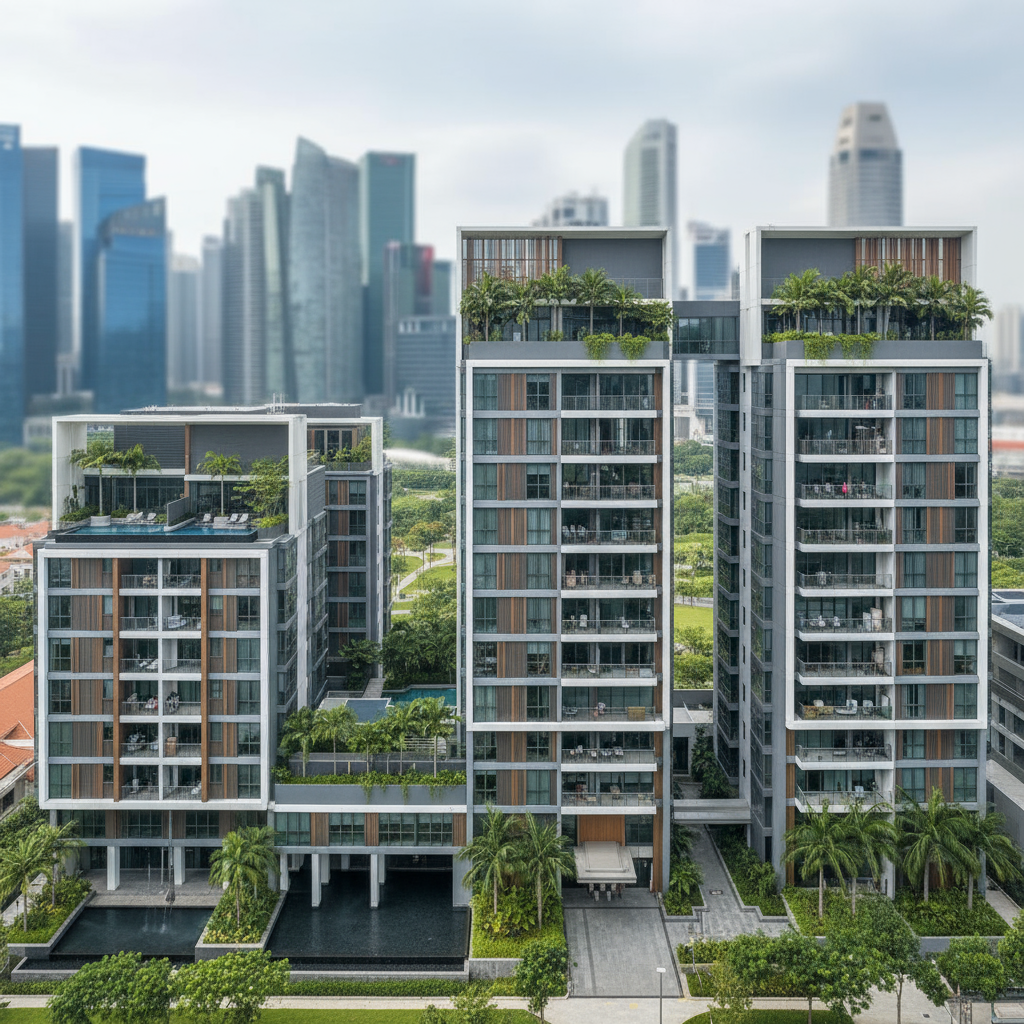
Eligibility to Buy an Executive Condominium in Singapore: Your Comprehensive Guide
Buying a home in Singapore is a significant life decision. For many, an Executive Condominium (EC) offers an attractive middle ground between public housing and private condominiums. ECs are a unique housing type in Singapore, developed and sold by private developers but with government subsidies. This hybrid nature means there are specific rules about who can buy them. Understanding the eligibility to buy an executive condominium is crucial for anyone considering this housing option.
This guide will thoroughly explain the eligibility criteria for purchasing an EC. We will cover the income ceilings, citizenship requirements, ownership restrictions, and other important rules set by the Housing & Development Board (HDB). For first-time buyers, upgraders, and real estate professionals, this information helps make informed choices. We aim to simplify the process and provide clear, actionable advice. Let us explore the details of EC eligibility, ensuring you have all the facts before you proceed.
Understanding Executive Condominiums (ECs)
Executive Condominiums (ECs) bridge the gap between HDB flats and private condominiums. They are built by private developers but receive government subsidies. This makes them more affordable than typical private condos. ECs offer condominium facilities like swimming pools, clubhouses, and gyms. They come with a 99-year leasehold tenure. After a five-year Minimum Occupation Period (MOP), ECs can be sold to Singapore Citizens and Singapore Permanent Residents. After ten years, they are fully privatised and can be sold to foreigners.
The government introduced ECs to cater to the sandwich class. This group earns too much to qualify for new HDB flats but finds private condominiums too expensive. ECs help them own a private-like property. This housing option has proven popular, with many EC projects selling out quickly. For example, the North Gaia EC in Yishun saw strong interest due to its location and facilities. Another successful project was Tenet EC in Tampines, which attracted many HDB upgraders.
The appeal of ECs lies in their potential for capital appreciation. While initial purchase prices are lower due to subsidies, their value often increases after privatisation. This makes them a good investment for many families. However, the specific eligibility rules mean not everyone can buy a new EC. These rules ensure that the subsidies reach the intended group. It is important to know these regulations before planning your purchase.
Key Eligibility Criteria for Buying a New EC
The HDB sets strict rules for eligibility to buy an executive condominium. These rules cover citizenship, family nucleus, income, and property ownership. Meeting these criteria is essential for any applicant.
* You must form a family nucleus.
* At least one applicant must be a Singapore Citizen.
* The other applicant must be a Singapore Citizen or a Singapore Permanent Resident.
* Single Singapore Citizens cannot buy new ECs directly from developers. They can only buy resale ECs after the MOP.
* Applicants must form a proper family nucleus. This can be:
* Married couple
* Fiancé/Fiancée scheme
* Parent and child(ren) (orphaned siblings can also apply)
* Multi-generation family
* For example, John and Mary, a married Singaporean couple, can apply. Similarly, Jane, a Singapore Citizen, and her Singapore Permanent Resident husband, David, can apply.
* The total gross monthly household income must not exceed S$16,000.
* This limit applies to all applicants and essential occupiers.
* Gross income includes basic salary, fixed allowances, and overtime pay. It does not include bonuses, ad-hoc overtime, or rental income.
* For instance, if a couple earns S$8,000 and S$7,000 respectively, their combined income is S$15,000, which meets the criteria. If their combined income is S$17,000, they do not qualify.
* Applicants must not own any other property, either locally or overseas.
* This restriction applies at the point of application and for 30 months before the application.
* This includes HDB flats, private residential properties, and commercial properties.
* If you currently own an HDB flat, you must sell it within six months of collecting the keys to your new EC. This rule ensures that ECs primarily serve those who need housing.
These rules ensure that ECs remain affordable and available to the target group. Understanding these points is the first step in assessing your eligibility to buy an executive condominium.
Specific Schemes and Grants for EC Buyers
Beyond the general eligibility rules, specific schemes and grants can help make ECs more affordable. These financial aids are designed to support different family types and income levels.
CPF Housing Grants
For eligible first-time Singapore Citizen buyers, several CPF Housing Grants are available:
* Family Grant:
* For families with a combined income of S$10,000 or less, the grant is S$30,000.
* For families with a combined income between S$10,001 and S$12,000, the grant is S$20,000.
* This grant helps reduce the initial purchase price.
* Half-Housing Grant:
* For a Singapore Citizen and Singapore Permanent Resident couple where the SC applicant previously received a housing subsidy.
* The grant amount is S$15,000 for incomes up to S$10,000.
* It is S$10,000 for incomes between S$10,001 and S$12,000.
* Proximity Housing Grant (PHG):
* This grant applies if you buy a resale HDB flat near your parents or married child. It does not apply to new ECs. However, it is worth noting for those considering HDB options.
These grants directly reduce the amount of cash required for the purchase. They are disbursed into the buyers’ CPF Ordinary Account. This money can then be used to offset the down payment or the purchase price. For example, a young couple, Marcus and Sarah, earning a combined S$9,000, could receive a S$30,000 Family Grant. This significantly reduces their financial burden.
Deferred Payment Scheme (DPS) vs. Progressive Payment Scheme (PPS)
Buyers of new ECs typically have two payment options:
* This is the standard payment scheme for new HDB flats and most new condominiums.
* Buyers pay for the property in stages as the construction progresses.
* For example, 10% down payment, then subsequent payments of 5% or 10% at various construction milestones.
* The loan amount drawn from the bank also increases progressively. This means interest payments start earlier but are lower initially.
* This scheme allows buyers to pay a 20% down payment. The remaining 80% is paid only upon completion of the EC project.
* This is particularly attractive for HDB upgraders. It allows them to sell their existing HDB flat and use the proceeds for the EC without needing to take a large bridging loan.
* However, properties purchased under DPS are usually priced 2-3% higher than those under PPS. This covers the developer’s holding costs.
* For instance, Mr. and Mrs. Tan currently live in an HDB flat. They want to buy an EC but need to sell their flat first. DPS allows them to secure the EC, sell their flat at a comfortable pace, and then make the bulk payment. This reduces stress and financial strain.
Choosing between DPS and PPS depends on your financial situation and existing property ownership. Understanding these options helps in planning your EC purchase effectively.
Common Scenarios and Practical Advice
Many different situations arise when people consider buying an EC. Here, we address some common scenarios and provide practical advice regarding eligibility to buy an executive condominium.
HDB Upgraders
Many HDB flat owners consider ECs when they want to upgrade to a property with private condominium facilities.
* Current HDB Flat Ownership: If you own an HDB flat, you must sell it within six months of taking possession of your new EC. This is a strict rule.
* Minimum Occupation Period (MOP): You must have completed your HDB flat’s MOP before applying for a new EC. The MOP is usually five years from the date you collect your keys.
* Example: Sarah and Ben bought their HDB flat in 2018. They completed their MOP in 2023. They can now apply for a new EC, provided they meet all other eligibility criteria. If they buy an EC, they must sell their HDB flat by mid-2024.
Second-Timer Applicants
Applicants who have previously received a housing subsidy from HDB are considered second-timers. This includes those who have:
* Bought a new HDB flat directly from HDB.
* Bought a resale HDB flat with a CPF housing grant.
* Taken over ownership of an HDB flat by way of transfer.
* Bought a new Executive Condominium directly from a developer.
Second-timers generally pay a resale levy when they buy another subsidised housing unit. However, for new ECs, the resale levy does not apply if you are buying directly from a developer. This is a common misconception. The resale levy applies if you buy another BTO flat or a new EC from HDB’s supply. For ECs, the main restriction is the 30-month waiting period after selling your previous subsidised property.
Divorced Individuals
Divorced individuals can apply for an EC under specific conditions:
* Scheme: They can apply under the Public Scheme (with children) or the Joint Singles Scheme (with another single Singapore Citizen).
* Custody of Children: If applying with children, the applicant must have legal custody, care, and control of the children.
* Age and Scheme: If applying under the Joint Singles Scheme, both applicants must be Singapore Citizens and at least 35 years old.
* Example: Maria, a Singapore Citizen, divorced her husband and has sole custody of her two children. She can apply for an EC under the Public Scheme with her children as part of her family nucleus, provided she meets other criteria like income and ownership restrictions.
Essential Tips for EC Buyers
By keeping these points in mind, you can approach the EC purchase process with confidence. Understanding the eligibility to buy an executive condominium from the start prevents future disappointments.
Future Outlook and Market Trends for ECs
The Executive Condominium market in Singapore remains a vital part of the housing landscape. Its unique position, offering private facilities with government subsidies, continues to attract a specific segment of buyers. Understanding future trends and the government’s approach helps in making long-term decisions.
Sustained Demand for ECs
Demand for ECs has been consistently strong. New launches often see good take-up rates, especially in mature estates or areas with good connectivity. For example, the upcoming EC launch in Tengah is expected to draw significant interest due to its “forest town” concept and green initiatives. Another highly anticipated project is the EC site in Bukit Batok West Avenue 5, which will benefit from proximity to amenities and transport links.
The government continues to release land parcels for EC development. This ensures a steady supply to meet demand. The eligibility criteria for ECs also help manage demand. They ensure that these subsidised homes go to those who genuinely need them and meet the income bracket.
Potential for Capital Appreciation
Historically, ECs have shown good potential for capital appreciation after their Minimum Occupation Period (MOP) and full privatisation.
* After 5-year MOP: Owners can sell to Singapore Citizens and Permanent Residents. Prices typically see an increase compared to their initial purchase price.
* After 10 years (Privatisation): ECs become fully privatised. They can then be sold to foreigners, similar to private condominiums. This expands the buyer pool and often leads to another round of price appreciation.
A study of past EC projects like The Amore in Punggol or Bellewaters in Sengkang shows healthy price growth after their respective MOPs. This makes ECs an attractive option for those looking for both a home and a potential investment. However, market conditions and location always play a role in property values.
Government’s Role and Future Policy
The government’s role in the EC market is crucial. They regulate eligibility, set income ceilings, and manage land supply. Any changes in these policies can affect the EC market. For example, if the income ceiling for ECs is adjusted, it will impact the pool of eligible buyers.
* Maintaining Affordability: The government aims to keep housing affordable for different segments of the population. ECs serve this purpose for the middle-income group.
* Balancing Supply and Demand: HDB’s land sales programme for EC sites helps balance the supply with the estimated demand. This prevents oversupply or undersupply.
* Reviewing Policies: HDB regularly reviews its housing policies. This ensures they remain relevant to the current socio-economic landscape. Buyers should stay updated on any announcements from HDB regarding EC eligibility or grants.
For individuals considering an EC, staying informed about these trends is beneficial. It helps in assessing the long-term value and suitability of an EC purchase. The eligibility to buy an executive condominium remains a cornerstone of the policy.
Conclusion
Understanding the eligibility to buy an executive condominium is the first and most important step for anyone considering this unique housing option in Singapore. ECs offer a fantastic opportunity to enjoy private condominium facilities at a more accessible price point, thanks to government subsidies. However, these benefits come with specific rules and restrictions.
We have covered the critical criteria: citizenship, family nucleus, income ceilings, and property ownership restrictions. We also looked at the available CPF housing grants and the differences between the Progressive Payment Scheme and the Deferred Payment Scheme. Practical advice for HDB upgraders, second-timers, and divorced individuals provides useful guidance for common scenarios.
The EC market shows sustained demand and good potential for capital appreciation, especially after the Minimum Occupation Period and full privatisation. The government’s ongoing role in regulating and supplying ECs ensures their continued relevance in Singapore’s housing landscape.
For those who meet the eligibility requirements, an Executive Condominium presents a valuable homeownership opportunity. It provides a comfortable living environment with modern amenities and potential financial growth. We encourage you to review your personal circumstances carefully. Seek professional advice from property agents and financial advisors to ensure a smooth and successful purchase journey. Making an informed decision about your eligibility to buy an executive condominium will set you on the right path to owning your dream home.
Start Your Property Journey with Zaidean
Whether you’re buying, selling, upgrading, or exploring a career in real estate — Zaidean walks with you. We believe in clarity, results, and people-first service. WhatsApp us to book a consultation or learn how to grow with us.